A global manufacturing supplier specializing in comprehensive solutions for food processing projects

+86 0536 6063 199
+86 159 0802 8606
中国山东渭方777号,长占路,高新区
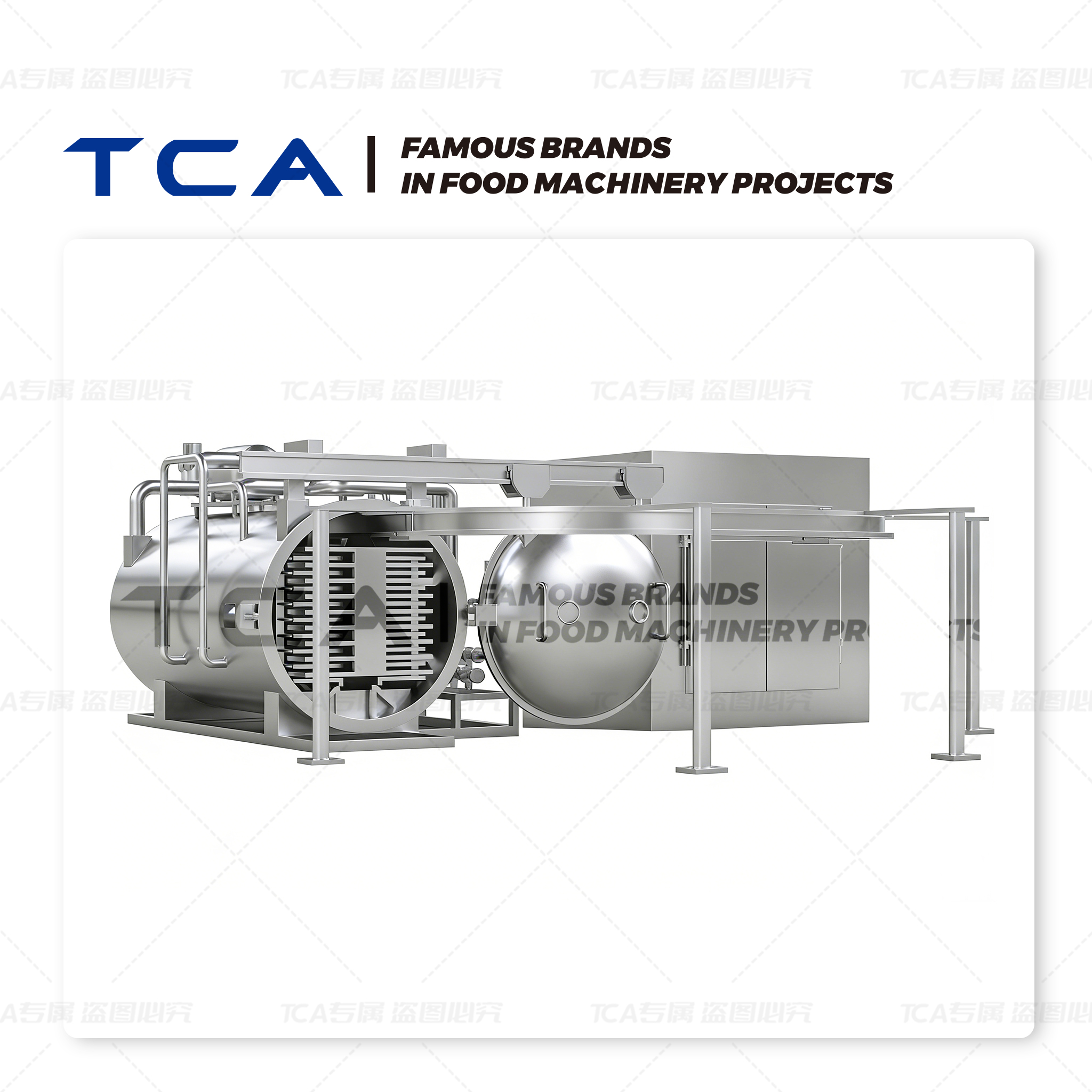
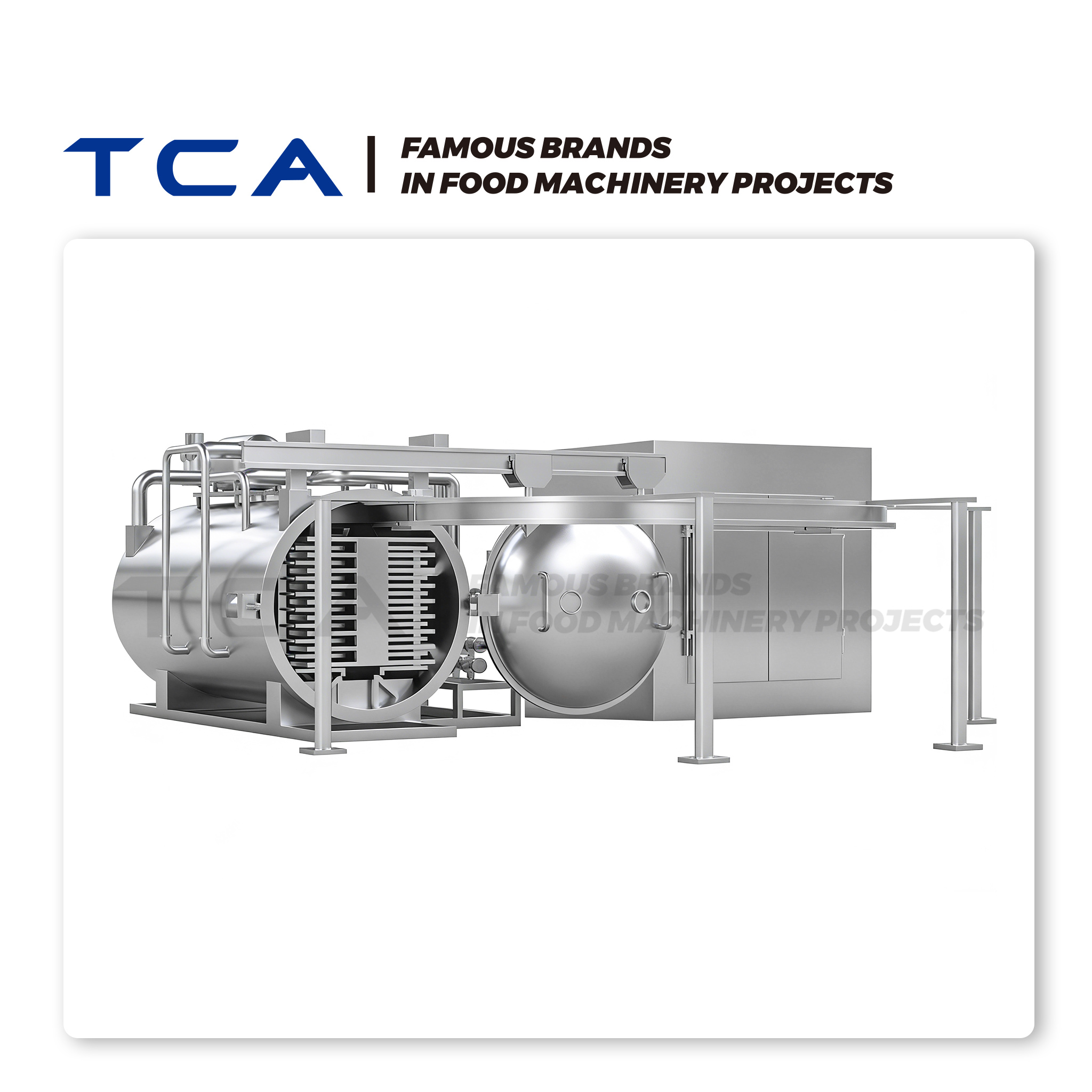
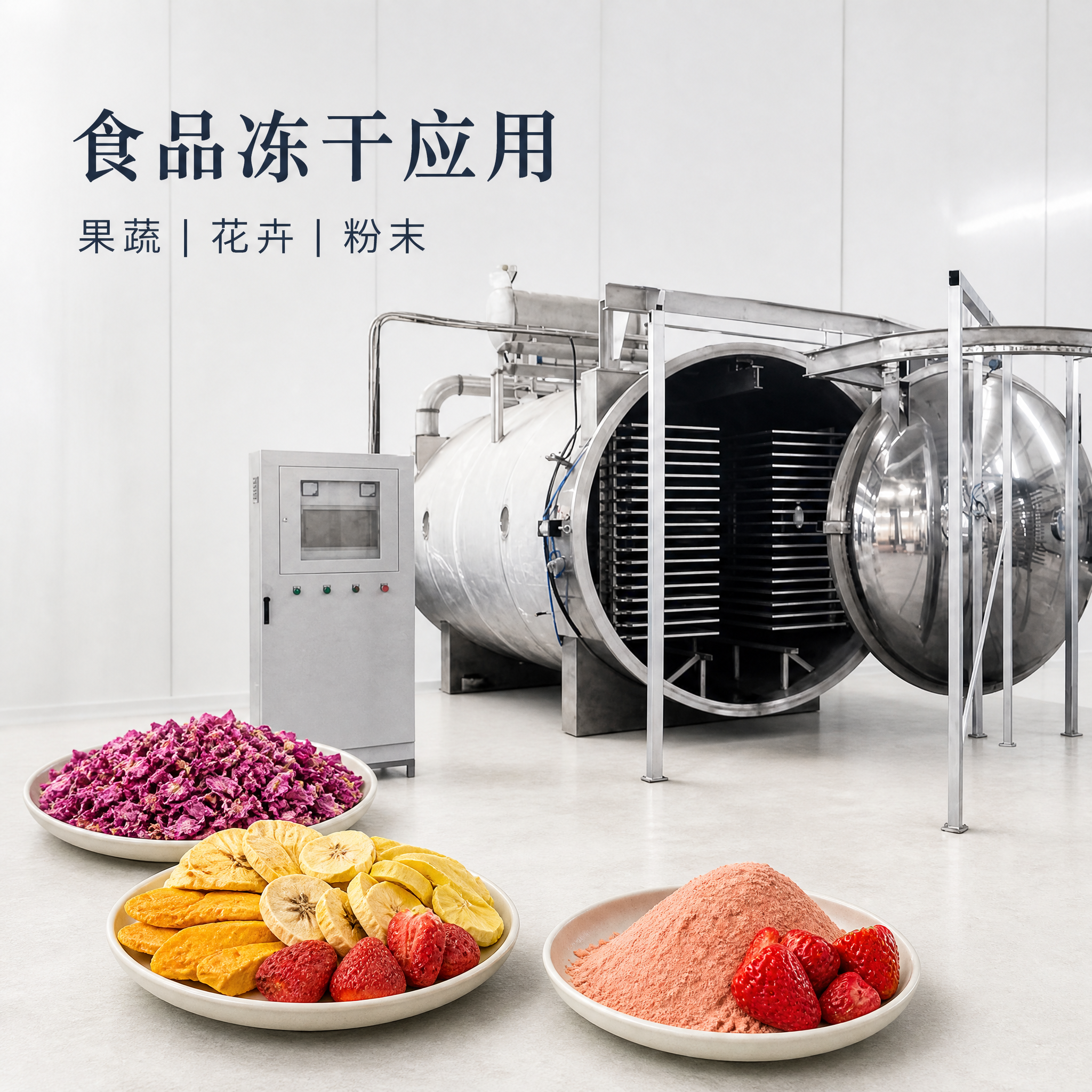
Fruit and vegetable vacuum freeze dryers (also known as fruit and vegetable vacuum freeze dryers) are specialized deep-processing equipment that uses the principle of low-temperature sublimation to dehydrate and lock in the freshness of fruits and vegetables. Their core function is to sublimate the water in fruits and vegetables directly from solid ice crystals to water vapor in a low-temperature, high-vacuum environment, without damaging the cell structure and nutrients of the fruits and vegetables.
Product Description
They can preserve the natural color, aroma, taste and shape of the ingredients and achieve long-term freshness. They are widely used in food factories, fruit and vegetable cooperatives, research institutions and other scenarios, and are the core equipment for promoting the transformation of fruit and vegetable deep processing towards high added value and green development.
Core Structural Components of the Equipment
The fruit and vegetable vacuum freeze dryer consists of two main parts: the main unit and auxiliary units. These components work together to ensure a stable and efficient freeze-drying process. The core structure is divided into six modules, all made of food-grade 304 stainless steel or aluminum, meeting food hygiene standards. Some high-end models use 316L stainless steel for parts in contact with food, meeting pharmaceutical-grade cleanliness requirements:
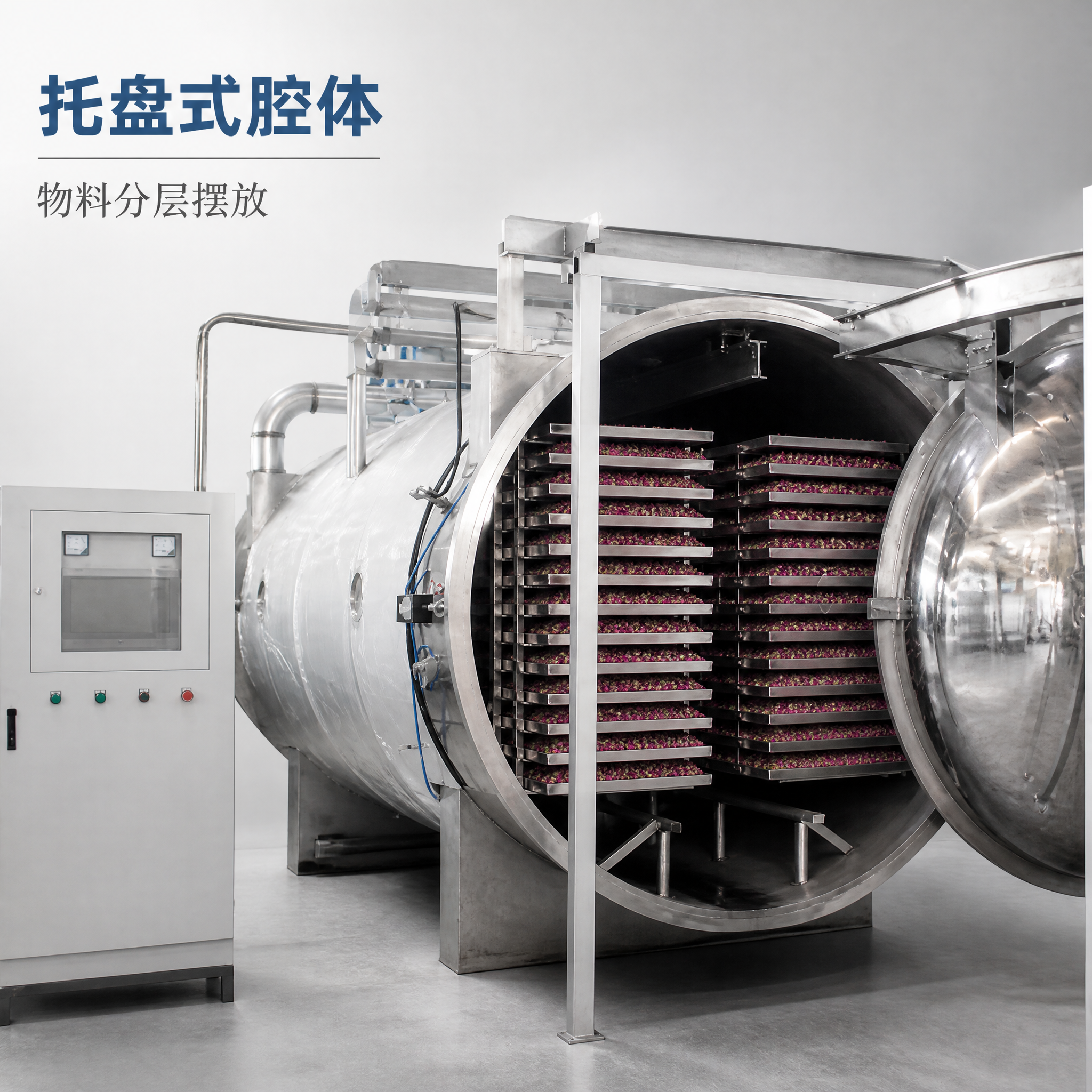
1. Freeze-drying chamber: The core working area, divided into a material compartment and a condensation compartment. It adopts a space-efficient rectangular sealed design, capable of withstanding positive and negative pressure. The seal uses high-temperature and low-temperature resistant silicone rubber, and the insulation layer uses closed-cell elastic thermal insulation material. The chamber is equipped with shelves (special hollow plywood, high strength, and good sealing) for placing fruits and vegetables. The top layer has a heat radiation compensation plate to ensure uniform temperature inside the chamber. An aviation-grade acrylic observation window is located on the side for real-time monitoring of the freeze-drying process. A drain outlet is located at the bottom. The chamber also includes auxiliary components such as a pressure gauge, temperature measuring resistor, and safety valve to ensure operational safety and process control.
2. Refrigeration Unit: The "cooling core" of the equipment. Mainstream models employ a cascade two-stage compressor, capable of achieving ultra-low temperatures of -70℃ in the cold trap, with a water capture capacity of 4-15 kg/batch. It rapidly captures water vapor generated during sublimation, preventing disruption of the vacuum environment, reducing defrosting frequency, and improving production continuity. It is suitable for processing high-moisture fruits and vegetables (such as cucumbers and watermelons). Some models can optimize pre-freezing temperatures based on food characteristics, addressing issues such as color preservation and odor control in heat-sensitive fruits and vegetables.
3. Vacuum Unit: Crucial for maintaining a high vacuum environment. Equipped with a corrosion-resistant vacuum pump, it can stably maintain an ultimate vacuum of ≤5Pa. A differential pressure valve (gas ballast valve) prevents oil backflow, avoiding contamination of raw fruit and vegetable materials. It also features rapid vacuuming capabilities, shortening the drying cycle and improving production efficiency. Suitable for processing high-end fruits and vegetables, medicinal herbs, and other materials requiring high purity. The vacuum pump exhaust port is equipped with an oil mist collector to prevent exhaust gas pollution.
4. Heating Unit: Responsible for precise temperature control, employing a silicone oil circulating heating medium. Compared to traditional electric heating, this improves temperature control accuracy by 50%, ensuring a shelf temperature difference of ≤1℃. Some high-end models utilize zoned temperature control technology, controlling the temperature difference within 0.5℃. It can precisely adjust the heating curve according to the characteristics of different fruits and vegetables (leafy vegetables, berries, root vegetables), avoiding nutrient loss or morphological damage caused by localized overheating. Simultaneously, heat recovery technology can be used to recover and reuse heat from the sublimation stage, reducing energy consumption.
5. Circulation and Pneumatic System: The circulation system is responsible for the circulation and delivery of silicone oil and refrigerant, ensuring uniform and stable temperature and vacuum levels. The pneumatic system controls the automatic locking of the chamber door cylinders, ensuring the chamber's airtightness and preventing vacuum leakage during freeze-drying, thus improving equipment operational stability.
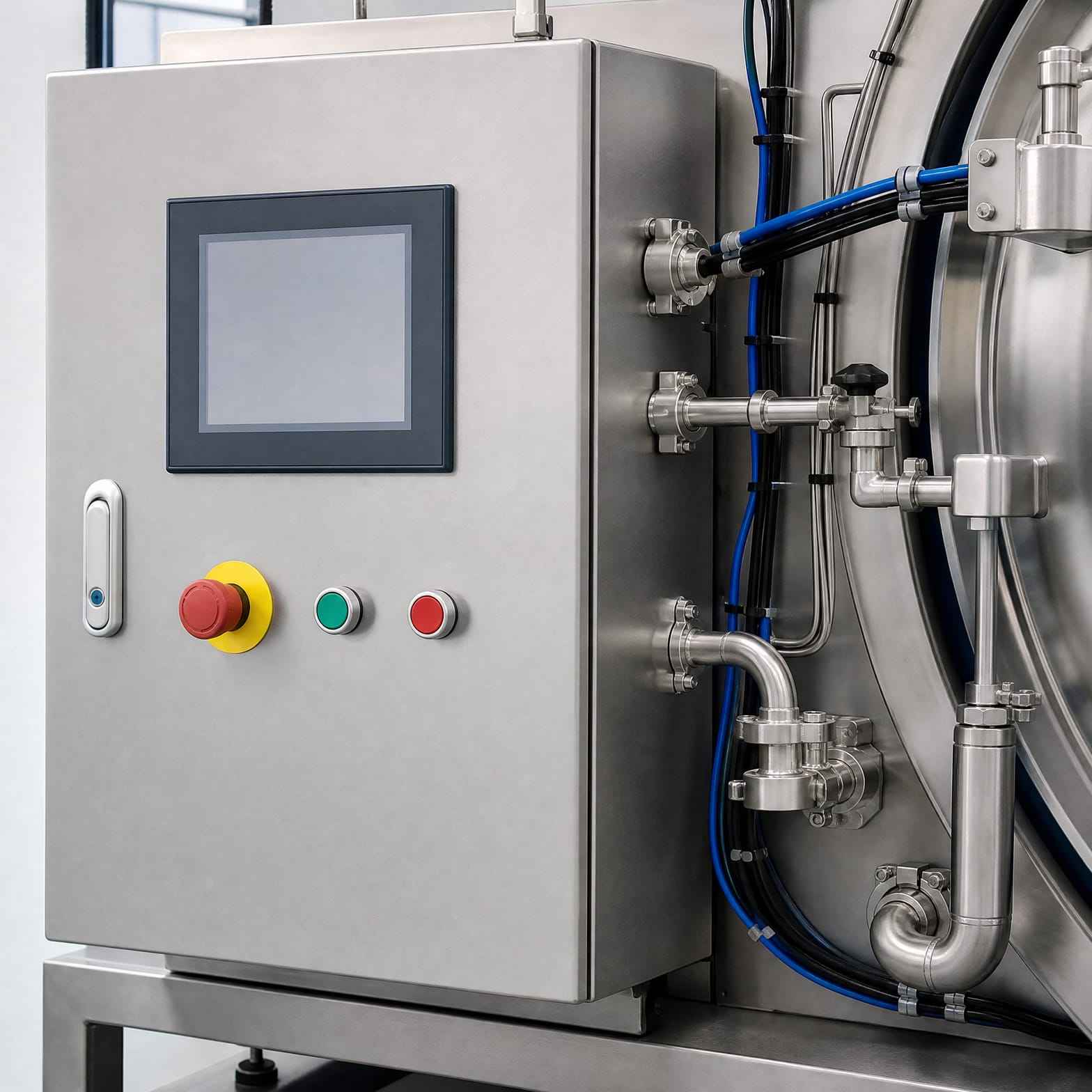
6. Intelligent Control System: The "brain" of the equipment, equipped with an industrial-grade PLC and touch screen, supports the storage of 40 sets of process recipes, and can monitor and record temperature and vacuum curves in real time, meeting GMP audit traceability requirements; some models support remote monitoring via mobile APP and export of freeze-drying curves via USB flash drive, eliminating the need for 24-hour on-site personnel, reducing labor costs, and can also optimize freeze-drying curves through AI algorithms to achieve automatic adjustment of process parameters, improving product stability and production efficiency.
Production Process Flow
The core technology of fruit and vegetable freeze dryers is based on the three-phase equilibrium principle of water. When the pressure is below the triple point pressure of water (approximately 611 Pa), ice can directly sublimate into water vapor without passing through a liquid state.
The complete freeze-drying process consists of three stages:
1. Pre-freezing stage
Fresh fruits and vegetables are rapidly frozen at temperatures ranging from -30°C to -50°C. This converts free and bound water within the cells into solid ice crystals, preventing ice crystal growth and damage to cell structure.
Impact of freezing rate: Rapid freezing (10-50°C/min): Forms fine microcrystals, causing minimal cell damage and resulting in high-quality products. Slow freezing (1°C/min): Forms coarse ice crystals, which is beneficial for sublimation drying but may damage cell structure.
2. Primary Drying (Sublimation Stage)
In a high vacuum environment of ≤5 Pa, solid ice crystals sublimate directly into water vapor without passing through a liquid state. This stage requires precise control of the partition temperature (typically -40℃ to +30℃) to allow the ice crystals to sublimate slowly, preserving the porous structure of the fruits and vegetables.
3. Desorption and Drying (Desorption Stage)
Heating to +20℃ to +60℃ removes bound water tightly connected to the solid material, reducing the final moisture content to 1%-4%.
Drying endpoint determination criteria:
Material temperature and heating plate temperature tend to match and remain consistent for a period of time.
Vacuum degree in the drying chamber becomes basically stable.
Cold trap temperature returns to its no-load value.
Freeze-Drying VS. Traditional Drying Methods
|
Comparison Items |
Freeze-drying |
Hot air drying |
Frying dehydration |
|
Color |
Close to fresh product |
Dark browning |
Dark yellowish-brown |
|
Nutrient retention |
≥90% |
40-60% |
20-40% |
|
Rehydration ability |
≥85% |
30-50% |
Non-rehydrating |
|
Oil Content |
0% |
0% |
15-25% |
|
Texture |
Crispy |
Dry and Hard |
Crispy and Oily |
|
Shelf Life |
24-36 Months |
6-12 Months |
12-18 Months |
Common Freeze-Dried Fruit And Vegetable Varieties
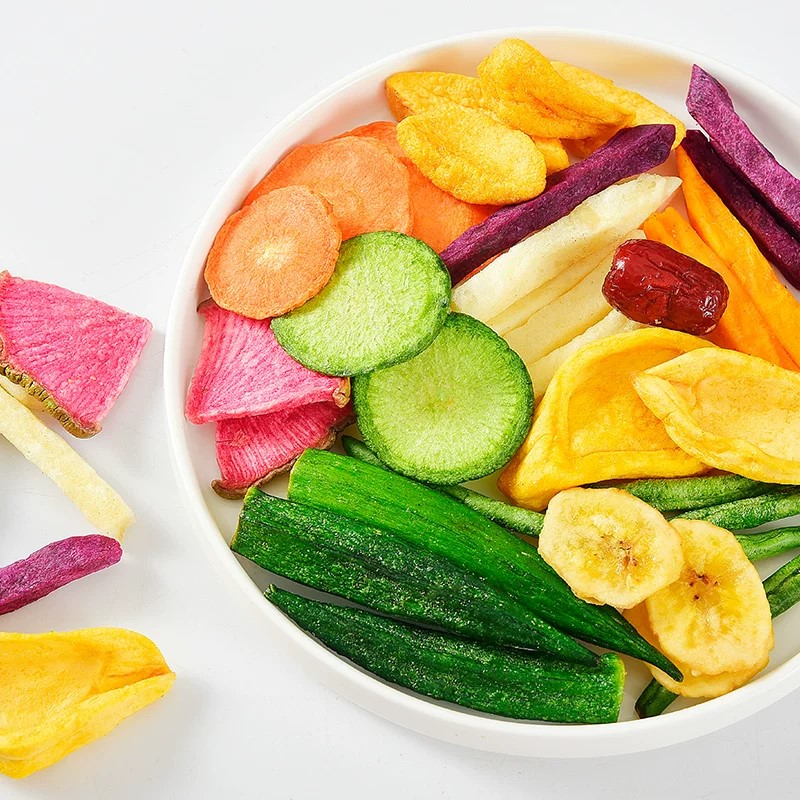
Fruits: Strawberries, blueberries, raspberries, mangoes, apples, bananas, kiwis, pineapples, grapes, cherries, etc.
Vegetables: Carrots, pumpkins, spinach, broccoli, tomatoes, onions, garlic, mushrooms, shiitake mushrooms, etc.
Others: Okra (also known as "beauty finger" okra), purple sweet potatoes, ginger, and other specialty varieties.
Freeze-dried fruit and vegetable production lines utilize freeze-drying technology as their core. While the initial investment in equipment is relatively high, the products boast high added value and command good market prices. With the increasing consumer demand for healthy, natural, and additive-free foods, the market prospects for freeze-dried fruits and vegetables are promising. During production, it is crucial to focus on controlling the quality of raw materials, color preservation processes, and freeze-drying process parameters to ensure stable product quality.
Shandong TCA Intelligent Technology Co., Ltd. is a global manufacturing supplier specializing in comprehensive solutions for food processing projects. Its core focus is on the research and development and sales of complete sets of equipment for processing potatoes, fruits and vegetables, and meats. With strong technological R&D capabilities, a comprehensive end-to-end service system, and a global footprint, it has become a leading enterprise in the fruit and vegetable processing equipment field. Its fruit and vegetable vacuum freeze-drying equipment, with its high degree of automation, stable equipment performance, and excellent cost-effectiveness, is suitable for medium to large-scale food processing enterprises with large-scale production needs, plans to expand into international markets, or those requiring complete solutions.
FrequentlyAskedQuestions
我们为完整的加工线提供长期的售后支持,包括技术咨询、故障排除帮助、备件供应和系统升级建议。提供详细的操作手册和维护指南,确保日常操作顺利进行。
我们的解决方案服务通常包括工艺分析、设备配置、生产线布局图、操作指导和技术支持。根据要求,我们还可以通过在线支持协助安装指导、调试和操作员培训。
我们根据您的工厂布局、加工能力和生产要求提供定制解决方案。我们的工程团队可以协助生产线设计和技术规划。
该设备设计用于处理不同尺寸的土豆。对于切割或去皮等某些工艺,可以提供可调节的设置或尺寸分级解决方案,以确保一致的输出质量。
该机器设计用于加工各种食品原料。根据具体型号,它可以处理规定尺寸和湿度范围内的新鲜、冷藏或冷冻材料。为了获得最佳性能,我们建议在订购前确认原材料规格。
准备好开始一个项目了吗?
如果您对我们的任何产品感兴趣或想定制订单,欢迎随时联系我们。我们期待与您建立成功的商业关系。